





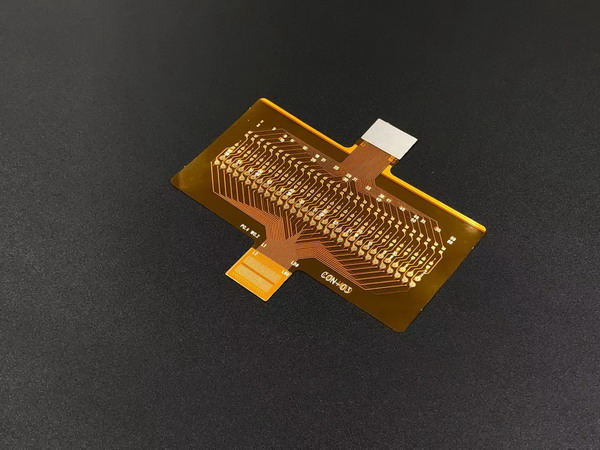
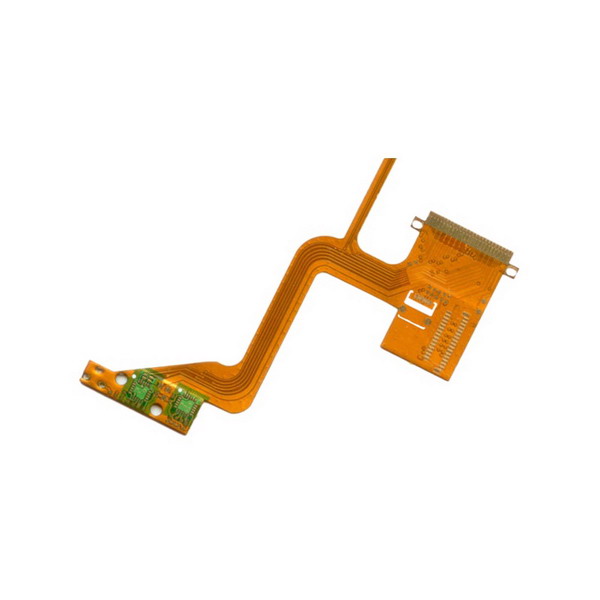
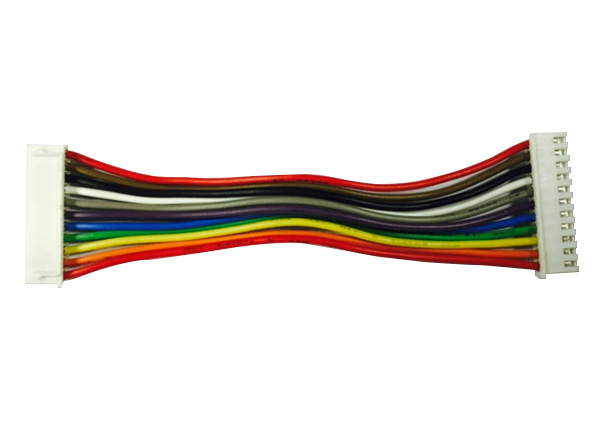

FFC (flexible flat cable) is a laminated cable with parallel FLAT conductors for simple point-to-point links, typically into a ZIF/LIF connector — cheap and fast. FPC (flexible printed circuit) is an etched polyimide flex circuit for denser routing and can carry components — not only a connector. RFC (round flat cable / round-end flat cable) uses ROUND conductors at one or both ends for through-hole or wave soldering to a PCB, so no connector is needed. A hybrid RFC has round pins on one end and a flat ZIF end on the other. Choose FFC for cost and speed, FPC for complex routing, and RFC when you need a vibration-resistant solder jumper without a connector.
Choose FFC for simple point-to-point links when cost and a 7-day sample matter most. Choose FPC when you need complex routing, component mounting or dynamic flex on a polyimide circuit. Choose RFC (round flat cable) when you need to solder round conductors to the PCB — through-hole or wave solder — with no connector, or a hybrid round-to-flat end for ZIF. Typical in appliances, automotive lighting and industrial boards. Our engineers can review the drawing with you.
All three lines are built to drawing. For FFC: pitch 0.3–2.54 mm, pin count, length, PI or PET insulation, EMI shielding (aluminum foil, copper foil, absorber, conductive fabric, silver mesh), stiffener and plating (tin, gold or selective gold). For FPC: layer count, line/space, polyimide or PET, coverlay and ZIF compatibility. For RFC cable: pitch 1.0 / 1.25 / 1.27 / 2.0 / 2.54 mm, round conductors on one or both ends, tinning length, PET / PI / PVC insulation, hybrid round-to-flat ZIF, and optional EMI shielding.
Samples typically ship within 7 working days after design confirmation. RFC samples with custom round-end tinning may take a few extra days. Bulk production is 15–30 days depending on quantity and complexity. Expedited slots are available for urgent programmes.
MOQ depends on product type, pitch, pin count and materials. As a guide: FFC from about 500 pcs for standard builds, FPC from about 100 pcs, RFC cable from about 50 pcs because of the round-end forming process. Prototypes and small lots are welcome for validation. Send the drawing for an exact MOQ and unit price.
Nurwire operates under ISO 9001:2015. FFC, FPC and RFC cable products use RoHS and REACH materials. UL certification is pending. Every lot goes through IQC, IPQC and OQC, with 100% electrical testing before shipment. FPC lots also get coverlay adhesion checks; RFC lots get solderability and thermal-shock checks on the round ends.
We offer aluminum foil (light and economical), copper foil (strongest EMI barrier among the foils), absorber (well suited to LVDS displays), conductive fabric (flexes with moving parts) and silver mesh (highest attenuation for critical links). FPC can take selective shielding on sensitive layers. RFC cables can carry foil or fabric shielding along the flat body up to the round-end solder zone.
We support FFC pitches from 0.3 mm to 2.54 mm, with pin counts from 4 to 120+ depending on pitch. Common pitches include 0.5 mm, 0.8 mm, 1.0 mm, 1.25 mm and 2.54 mm. Custom pitches are available on request. Maximum length depends on pitch and pin count — typically up to 1000 mm for standard builds.
We build FPC from single-layer to multi-layer (up to 8 layers) with line/space down to 0.05 mm. Thickness typically runs from 0.12 mm to 0.3 mm for compact stacks. Substrates include polyimide for higher temperature and PET for cost-sensitive builds. Coverlay and stiffener options add mechanical support. ZIF-compatible ends are available for dense assemblies.
RFC (round flat cable) suits board-to-board links that must be soldered — through-hole or wave — with no connector, or a hybrid round-to-flat end for ZIF. Typical uses include home appliances, automotive lighting, industrial control boards and compact consumer PCBs where vibration at the joint matters. An RFC jumper can replace a connector pair and simplify assembly.
Yes. We issue 2D drawings and specifications for review before sampling or bulk on FFC, FPC and RFC cable. For complex FPC and RFC cables we can also supply 3D models for mechanical fit. Revisions are turned around quickly when the design changes.
We serve automotive electronics, consumer electronics, industrial equipment and communications infrastructure. Custom FFC cables, FPC circuits and RFC cables go into displays, sensors, battery management, printers, networking gear and ADAS cameras. We do not claim medical-device or aerospace certifications we do not hold.
Send the requirement through the website or contact form: product type (FFC / FPC / RFC cable), pitch, pin count, length, shielding, termination, round-end type (one or both ends) and any special notes. Upload drawings if you have them. Engineering reviews the pack and returns a detailed quote within 24 hours.
Yes. We run OEM/ODM programmes for private-label FFC cables, FPC circuits and RFC cable assemblies. From concept to volume we cover custom design, material selection, 7-day samples and supply-chain follow-through, with dedicated engineering for long-term accounts.
Yes, as part of custom FFC and FPC manufacturing. We can build the cable or flex to your pitch and length, then fit the ZIF or non-ZIF connector family specified on your drawing. Pitch, lock style and plating follow the mating part you choose. We do not sell standalone connector catalogues — termination is an option on the custom FFC or FPC you order.
Yes. We provide functional samples of FFC, FPC and RFC cable before volume. Sample lead time is typically 7 working days after design confirmation; RFC cable may need a few extra days for lamination. Samples are tested to the specification. Prototype and small-batch runs are available before you commit to full production.