






Applications of FPC Circuits in Consumer Electronics & Medical Devices
Custom FPC circuits have become indispensable in modern electronics, enabling the miniaturization, functionality and reliability that consumers and healthcare manufacturers demand. The broader flex interconnect market was valued at about USD 7.00 billion in 2025 and is projected to reach USD 10.63 billion by 2032 (CAGR 6.14%), driven by consumer electronics, medical equipment, automotive electronics and industrial devices.
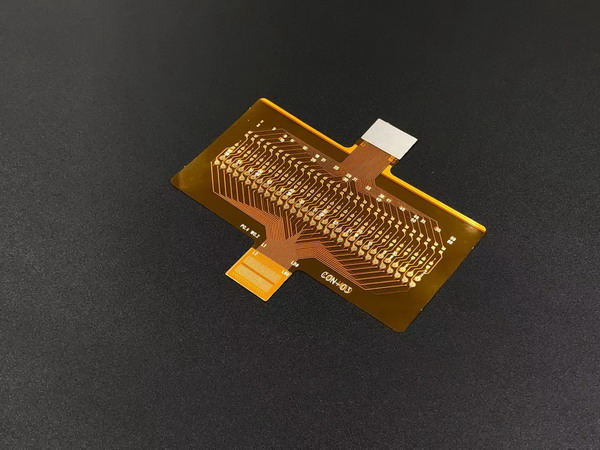
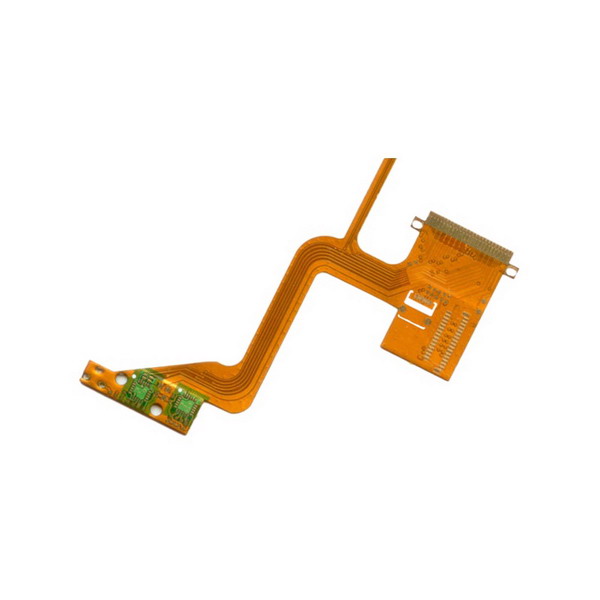
When space, weight and form factor drive the layout, etched FPC on polyimide supports miniaturization, dynamic flexing and high-density routing that rigid PCB stacks cannot. Circuits can bend, fold and follow irregular surfaces — product shapes that catalogue jumpers rarely fit.
High-density design and finer pitch have opened new form factors in wearables, foldable displays and compact medical devices. Line/space down to about 0.05 mm and conductor pitches around 0.3 mm let more function into smaller housings.
In consumer electronics, smartphones are among the toughest applications. Display-to-board, camera-to-ISP, battery-to-PMIC and antenna-to-RF paths often run on custom FPC. Low stack height and controlled folds keep the chassis thin. Foldables add another bar: hundreds of thousands of bend cycles without electrical opens.
Smartwatches and fitness bands constrain volume even further. Custom FPC delivers dense routing in minimal space and conforms to curved housings typical of wearables.
In laptops, FPC links display, keyboard, touchpad and camera subsystems to the motherboard. Ultra-thin notebooks leave almost no budget for interconnect thickness, so flex circuits become the default.
Medical equipment is one of the fastest-growing FPC uses. Patient monitors — ECG, SpO2, blood pressure — need long-life links between sensors, processing boards and displays with stable contact resistance over the product life.
Diagnostic imaging such as ultrasound, CT and MRI moves large data volumes between modules; multi-layer FPC with controlled impedance supports dense, high-speed channels under ISO 9001 manufacturing processes (we do not claim device-level medical certification).
Surgical robots impose some of the harshest flex-life targets. Compact articulated arms need motors, sensors, cameras and controls connected through circuits specified for high bend-cycle counts — often into the millions.
Implantable and wearable health devices — pacemakers, neurostimulators, glucose monitors, CGM and ECG patches — combine miniaturization with reliability. Custom FPC keeps devices light and small while holding the electrical stability accurate monitoring requires.
Core advantages of custom FPC: space efficiency, design freedom for 3D paths, high reliability, dense routing at fine pitch, and vibration/shock tolerance when the stack-up and coverlay are specified correctly.
As devices integrate more functions, FPC stack-up and termination style move into early concept reviews and influence enclosure, thermal and service plans. Trends point to finer pitch, wider temperature materials and structures optimized for dynamic flex.
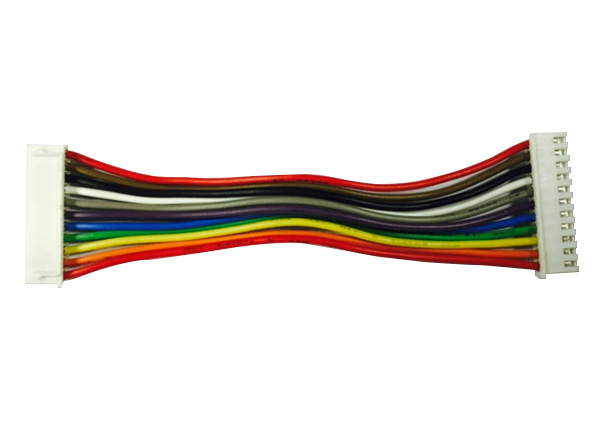
Nurwire manufactures custom FPC circuits — and matching FFC or RFC when the drawing calls for them — under ISO 9001:2015 for consumer electronics and medical-equipment manufacturers. Contact us to align pitch, layers, shielding and termination to your next product.