






FFC Cable Market Outlook 2026-2032: Automotive and Consumer Electronics
The global flexible flat cable (FFC) market is expanding as electronics become denser, lighter, and more software-defined. Industry research values the market at USD 2.36 billion in 2025, with a rise to USD 2.61 billion in 2026 and an estimated USD 4.81 billion by 2032 — a compound annual growth rate of 10.66%. That curve is not a generic interconnect boom; it tracks the need for thin, repeatable, high-integrity links inside vehicles, handsets, displays, and industrial controls.
Automotive electronics is the most visible demand engine. Electric vehicles and advanced driver-assistance systems (ADAS) replace bulky round harnesses with compact routing through dashboards, door modules, battery packs, and camera assemblies. FFC cables combine a flat profile, controlled impedance, and the option of EMI shielding, which helps engineers manage high-speed video and sensor data without adding mass. As vehicles add domain controllers and more cameras, custom FFC pitch, length, and plating become part of the electrical architecture, not an afterthought.
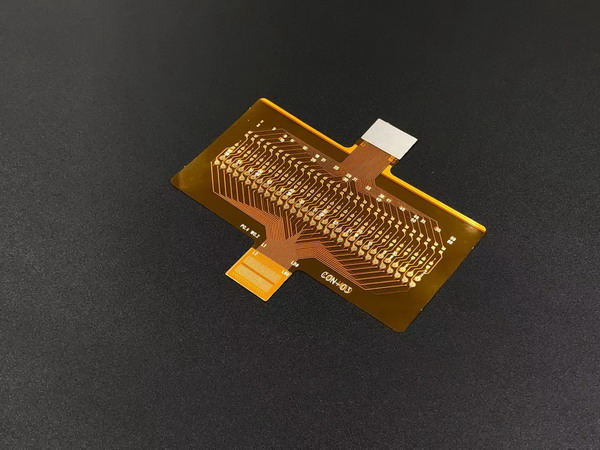
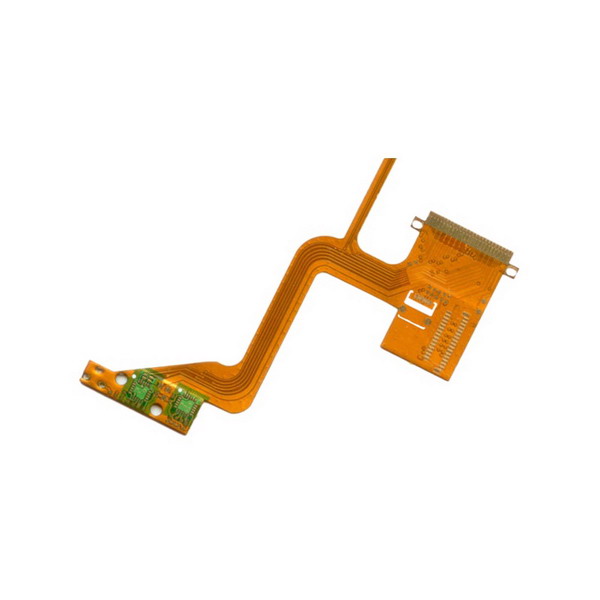
Consumer electronics continues to compress function into thinner stacks. Smartphones, tablets, wearables, and smart-home products need board-to-display and board-to-board links that survive repeated flexing. Foldable displays and ultra-thin chassis have accelerated FFC adoption because a ZIF-mated flexible flat cable can be specified for the exact fold path, rather than forcing a round cable through a hinge. Signal integrity and EMI control matter as much as thickness once 4K and 8K panels, high-refresh cameras, and always-on sensors share the same envelope.
Asia-Pacific remains the largest FFC cable market. China, Japan, South Korea, and Taiwan combine high-volume electronics manufacturing with growing automotive production, so both output and consumption stay concentrated in the region. Established supply chains for PET and polyimide insulation, copper conductors, and FPC connectors keep lead times and cost competitive for OEM programmes that need custom FFC in volume.
North America and Europe are growing from a smaller base, with medical devices, industrial automation, and aerospace programmes specifying FFC where weight, serviceability, and vibration resistance count. Those programmes typically ask for RoHS and REACH documentation, ISO 9001 process control, and traceable plating and insulation lots. They also push suppliers toward shielded constructions when drives, radios, or high-current paths sit next to low-level analog or LVDS lines.
Manufacturers are investing in high-speed, high-frequency FFC to serve next-generation automotive displays and communication links. Differential-pair layouts, tighter impedance windows, and foil or mesh EMI shielding are moving from specialty SKUs into mainstream RFQs. At the same time, buyers are rebalancing dual-source strategies after several years of supply-chain disruption, which favours factories that can hold process capability while changing pitch, pin count, or stiffener without a full line reset.
For procurement and engineering teams, the practical question is not whether FFC will grow, but whether a given design can lock pitch, ZIF compatibility, shielding, and length early enough to protect cost and schedule. Late changes to connector family or fold geometry are expensive. Teams that treat flexible flat cable as a designed interconnect — with DFM input on bend radius, gold or tin plating, and reinforcement — will be better placed as volumes rise through 2032.
Nurwire manufactures custom FFC cable under an ISO 9001:2015 quality system, with RoHS and REACH-compliant materials, optional EMI shielding, and pitch, length, and plating matched to automotive, consumer, and industrial OEM drawings. Contact us if you need a flexible flat cable specified for your next platform rather than adapted from a catalogue part.